
Where this comes from
Before Trove Collections became a collection of recommendations, it was a family story. This page is where our philosophy comes from — why aviation appears throughout the site, and why every recommendation here is expected to earn its place.
The short version: "If you fly it, you should be able to fix it." Grandpa Jim said that to my grandfather — and my grandfather took it literally. He's the one in the family who earned the airframe-and-powerplant license, the one who stripped and re-covered a Stearman with his own hands. The license stopped with him. The standard didn't. Four generations of pilots later, it's still how this family decides what to trust — and what gets to be on this site.
My family has flown for almost a hundred years. That isn't an opening flourish — it's the literal headline. Lt. Col. James A. Philpott — my great-grandfather, the family calls him Grandpa Jim — first soloed an airplane on September 8, 1928. He was 16. The brand is timing toward his centennial: September 8, 2028.
Four generations later, I'm 20, a Communications major at the University of Arizona, hoping to earn a military commission after I graduate. In between him and me are almost a hundred years of cockpits, a TWA test-pilot job that turned into a 490th Bombardment Squadron command, a Continental seniority-list #1 retirement handed off mid-flight over the Pacific on a frequency called fingers, three sisters flying for major US airlines, a regional-jet pilot cousin who flies aerobatic biplanes on weekends, a 1982 TV commercial featuring an acne stick, and the teaching Grandpa Jim passed down to my grandfather: if you fly it, you should be able to fix it.
This is the long version of why every item on the shop has been somewhere. We come from people who go places.

Generation 1 — Lt. Col. James A. Philpott (Grandpa Jim)

First solo: September 8, 1928, age 16, in a Velie Mono Coupe — a single-engine, two-seat, high-wing trainer. Verified through family records and the 2003 History Channel documentary credits. That date is a real anchor — it's the reason Trove Collections is timing toward 2028 as its centennial year.
The career that followed runs straight through the spine of the 20th century: Army Air Corps first; hired by TWA in 1940 originally as a test pilot; recalled to active duty after Pearl Harbor. His unit was flying P-40s and early P-51s when the word came down: they were becoming a bomber squadron. On October 20, 1942, Grandpa Jim took command — the first commander of the 490th Bombardment Squadron, the B-25 Mitchell unit the war would come to know as the Burma Bridge Busters. The Skull & Wings squadron insignia, painted on the nose of a B-25 named Flagship of the Skull & Wings, originated in his command.
The 490th had some notable names pass through it, too — Arnold Spielberg, Steven Spielberg's father, served as Communications Chief with the Burma Bridge Busters.
Late in the war he flew Foreign Aircraft Evaluation at Wright Field — Wright-Patterson AFB — flight-testing captured German and Japanese aircraft against US fighters to find the weaknesses. Two test pilots would dog-fight a captured Axis aircraft against one of ours, then swap. Declassified, well-documented, real.
He retired from active duty as Lt. Col. and went back to TWA as a line pilot, eventually Captain. Stayed in the Air Force Reserve. Got checked out on the KC-135 at Edwards AFB before TWA had even taken delivery of the airplane. That's also where he became friends with Bob Hoover and Pancho Barnes — the Edwards/Mojave/Right-Stuff-era social orbit, in his case real and documented, not borrowed.
Hollywood-side, he served as President of the Associated Motion Picture Pilots — the stunt-pilot guild Pancho Barnes founded in 1932. He retired from TWA in September 1972. The fact that he was friends with Bob Hoover and went on to be neighbors with him in Palos Verdes Estates, keeping their aircraft at Torrance Airport, is not a story we made up to sound impressive. It's the kind of detail that explains the rest of the family.
The published legend
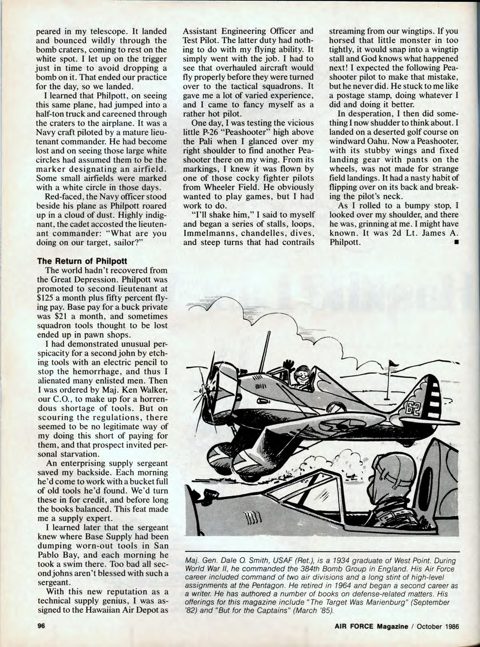
You don't have to take our word for any of this. In 1986 — fourteen years after Grandpa Jim retired — Maj. Gen. Dale O. Smith (Ret.) published a memoir about him in Air Force Magazine that opens: "There are major legends and minor legends, and then there was Philpott." It has stories we didn't put on this page: a young Flying Cadet who "fell" out of a B-10's open bomb bay mid-practice-run and parachuted down still holding his clipboard, and another general who, asked about him decades later, knew him only as the one who flew through a hangar in Denver. The General admits the memoir might be a little distorted — his words, and fair enough. Legends usually are. Read it in the magazine's archive: Philpott Has the Last Word, October 1986 →

And he's not just in print. In 2003, the History Channel aired a documentary on the 490th — Burma Bridge Busters. Much of what you'll see in it came out of our attic: Grandpa Jim's films and photographs, passed down to my grandfather, who provided them to the producers. There's a thank-you to the Philpott Family in the credits — the same credits that helped us verify dates on this page. A copy lives on YouTube: watch it here →

Beverly "Tutu" Philpott (née Brown)
My great-grandmother. Grandpa Jim's P-40 was named Beverly after her. The grandkids called her Tutu — Hawaiian for grandmother, probably picked up through Grandpa Jim's TWA Pacific routes. She belongs in this story because she's the reason the airplane had a name at all.
Generation 2 — Captain John Philpott

My grandfather. Career arc: Aerial Advertising with the family Hollywood business based out of Torrance Airport, flying the family Stearmans (more on those in a minute) → Sierra Pacific Airways as a regional pilot → Continental Airlines, hired October 1972, retired #1 on the seniority list 42 years later.
Retiring #1 on a major-airline seniority list is rarer than it sounds. It means he outlasted every single pilot hired before him over a four-decade career. Most senior captains retire on the seniority list. Very few retire at the top of it.
Along the way: Line Check Airman — the FAA-approved designation that lets a senior captain conduct line checks on other captains in revenue operations. Airlines reserve LCAs for their most trusted commanders. He's also a licensed A&P mechanic — Airframe and Powerplant — which is the FAA credential that authorizes a mechanic to maintain and sign off on aircraft. He has the mechanic license because Grandpa Jim required it. The rule, in Grandpa Jim's words: "If you fly it, you should be able to fix it."
Over 42 years he flew six transport types: Boeing 727, 737, 757, 767, 777, and Douglas DC-10. Propeller-era to glass-cockpit, in one career.
The Pacific frequency handoff — September 1972
The single best story in the whole heritage. The hand-off from Generation 1 to Generation 2, captured in one September 1972 afternoon at LAX:
Grandpa Jim's TWA retirement flight was Honolulu → LAX. Somewhere over the Pacific, his airplane crossed paths with a Continental pilot — a friend of his — flying the opposite direction, LAX → Honolulu. The Continental pilot had heard through the grapevine that John had been offered a position at Continental, and relayed the news to Grandpa Jim mid-flight on fingers — 123.45, the air-to-air frequency pilots use over oceanic airspace where there's no controller.
Meanwhile, back at LAX, John was being summoned to Continental's Flight Operations Office. He met with Captain "Red" Stubben, Continental's Vice President of Flight Operations, who offered him a position on the Continental New Hire list. Stubben noticed John kept checking his watch. Asked if he had somewhere to be — knowing exactly where: Grandpa Jim's retirement flight was inbound.
"You got somewhere to be?"
Stubben tapped John on the back with the formal welcome, handed him a pass to ride the Continental bus over to the terminal, and sent him to meet Grandpa Jim's retirement landing at the gate. John's official hire date was October 1972. The same week the previous generation walked off the flight deck for the last time, the next generation walked on. With the news delivered, somewhere over the Pacific, on 123.45.
The family Hollywood operation
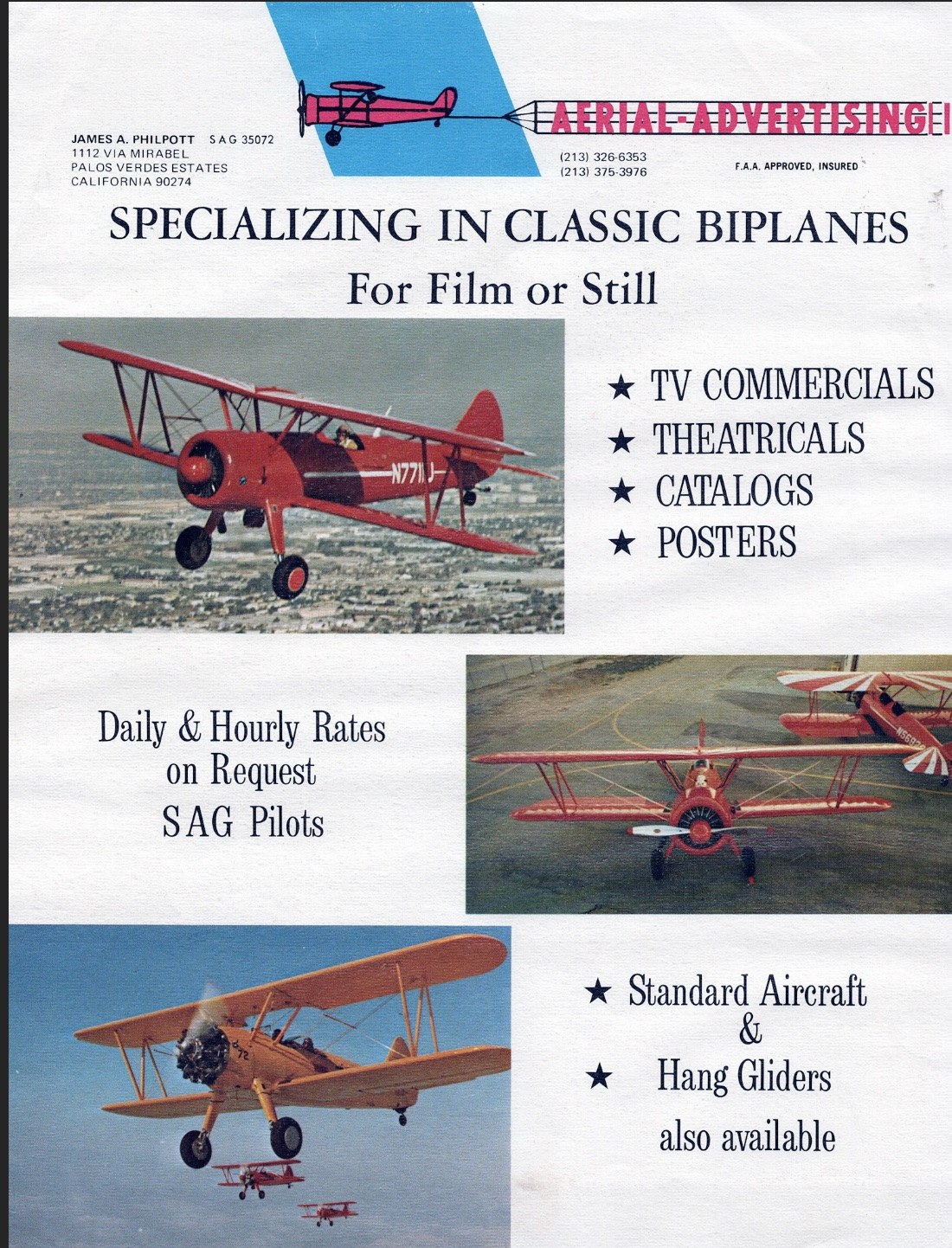
Before the airline years, the Philpotts ran a Hollywood aerial-advertising business out of Torrance Airport. The fleet was Boeing Stearman PT-17 biplanes, originally painted red with white sunburst stripes. The Stearmans worked banner-tow, sky-typing, and commercial-film aviation. They appeared in the Beach Boys Endless Summer poster artwork, a 1970s Hollywood aerial-advertising flyer, and most memorably a 1982 TV commercial for an acne product called Zit Stick — 33 seconds, archived on YouTube, in which the Stearman is staged to look as if it's shooting Zit Stick down at a beach in place of bullets. Captain John was the pilot in command for filming; a blonde model rides up front and is presented on camera as the pilot.
Captain John personally stripped and re-covered the airframe of the family Stearman — strip to airframe, replace the fabric covering, re-dope, repaint, recertify. During that re-cover he repainted it from the original red-and-white to blue with silver sunburst stripes. That's the version my mom (Micki) is standing on the wing root of, below.
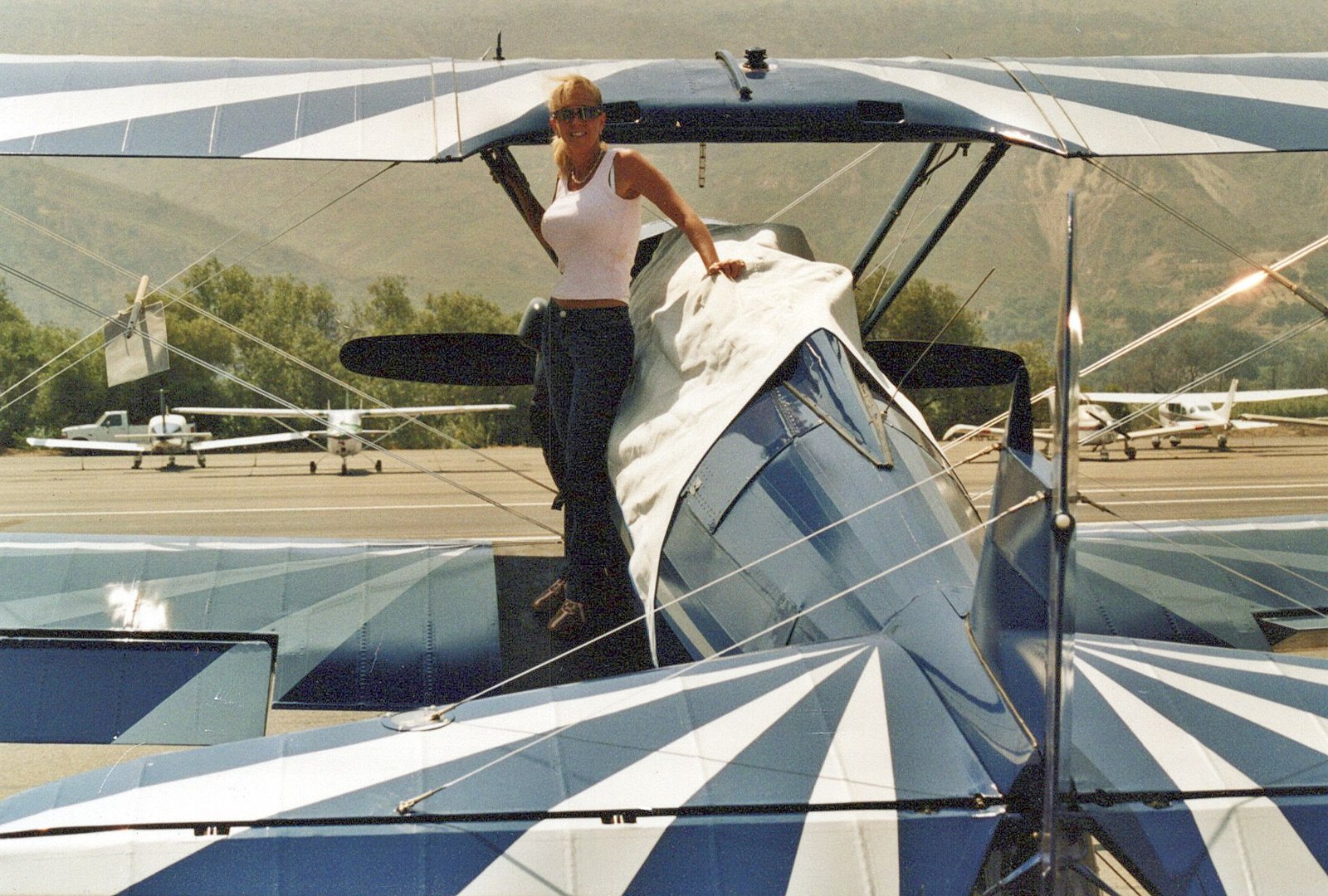
The family no longer owns any Stearmans. The last one was sold (year pending — Mom's still asking Grandpa). What stays is the rule, and the proof that the rule was real.
The one holding the camera
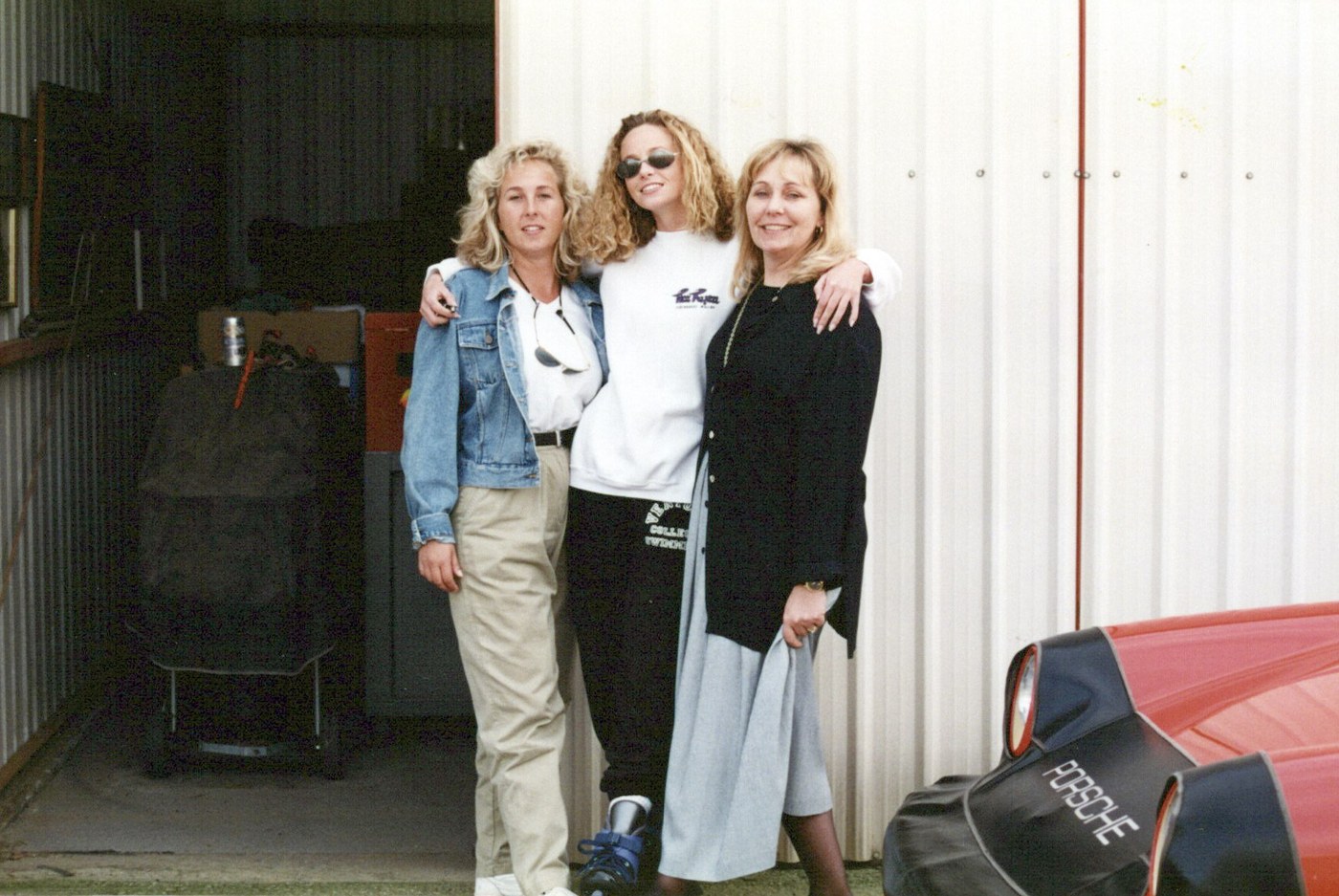
Go back through the last fifty years of photographs on this page. The Stearmans at Torrance. The hangar at Camarillo. The retirement party. Three daughters growing up at airports. Now notice who's missing from almost all of them.
That's my grandma — Barbara, but nobody has ever called her anything but Babs. For decades she has been standing exactly one camera-width outside this family's history, holding the thing that made the history keepable. Photographers are the one kind of archivist who pay for the archive by being absent from it. The modern half of everything on this page — so much of everything on this site — exists because Babs decided some ordinary Tuesday at the airport was worth saving. She was right every time.
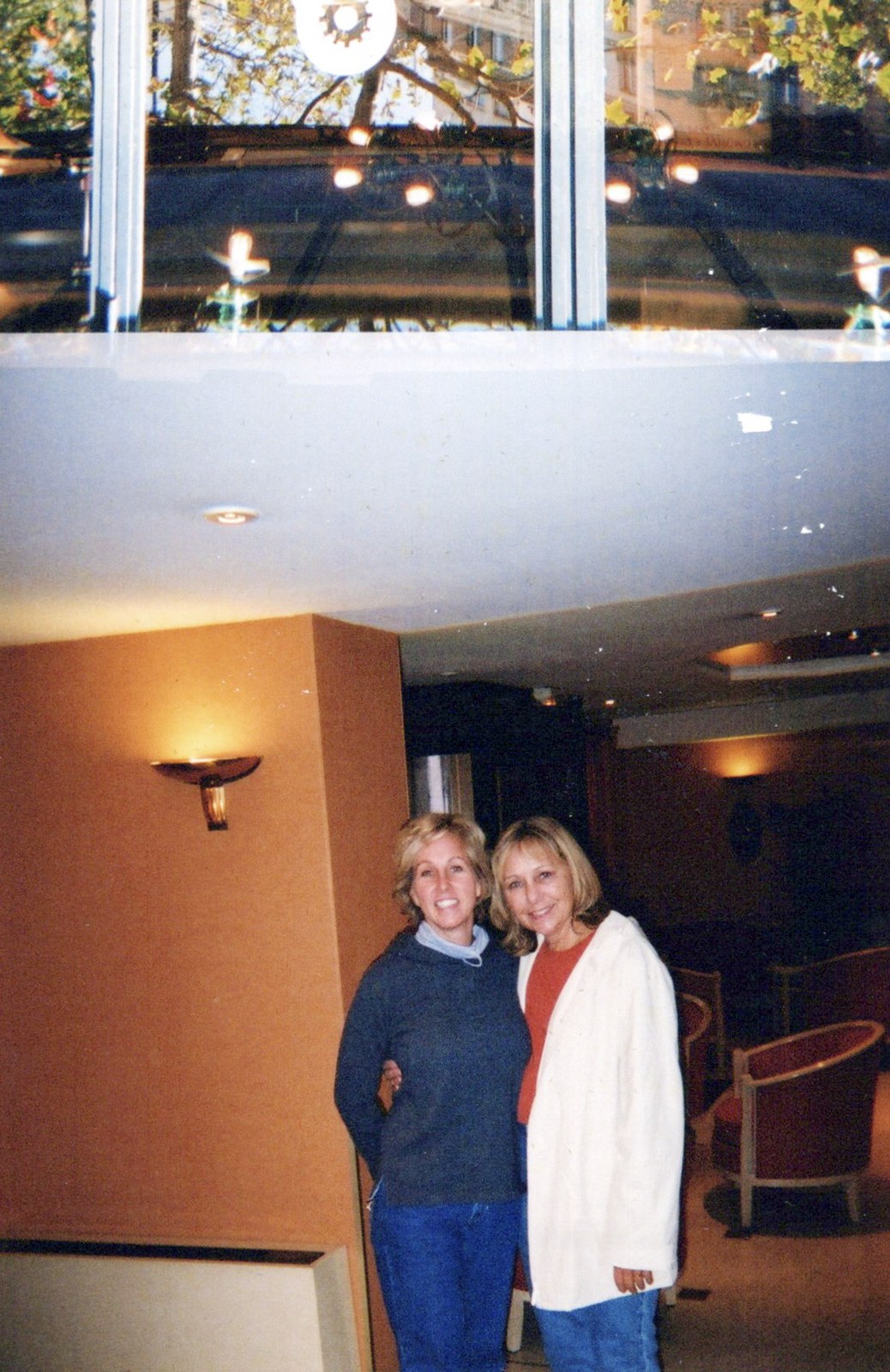
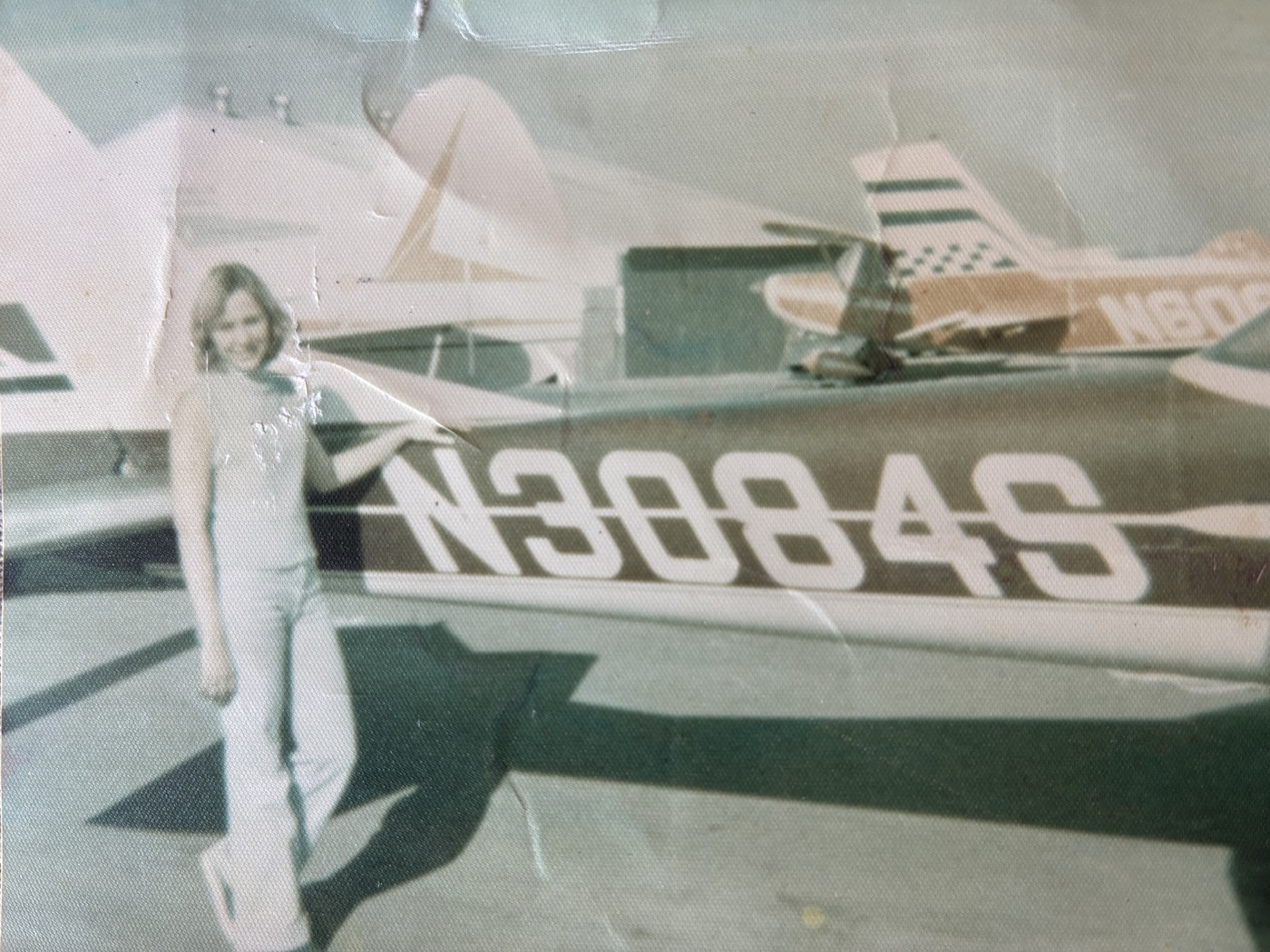
And don't mistake her for a spectator. She flies too — she soloed on January 14, 1976, at 24, in N3084S, and the family has the faded proof: a first-solo photo, hand on the tail, the same rite of passage as everyone else on this page. Married to a captain, mother of three captains, grandmother of a captain and an editorial director — and the reason any of us can prove any of it happened. In a family that measures itself in logbooks, hers might be the most complete one of all: it includes everybody.
The family rule is “if you fly it, you should be able to fix it.” Babs has a quieter one: if you love it, take the picture. This whole site is us finally learning her rule.
Generation 3 — Three sisters, three cockpits
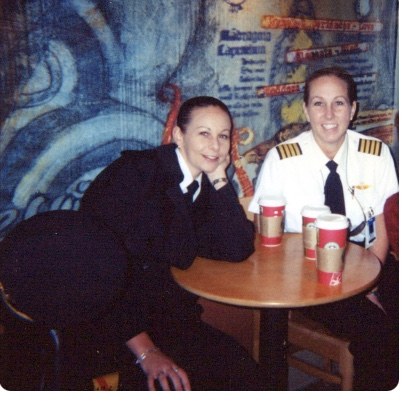
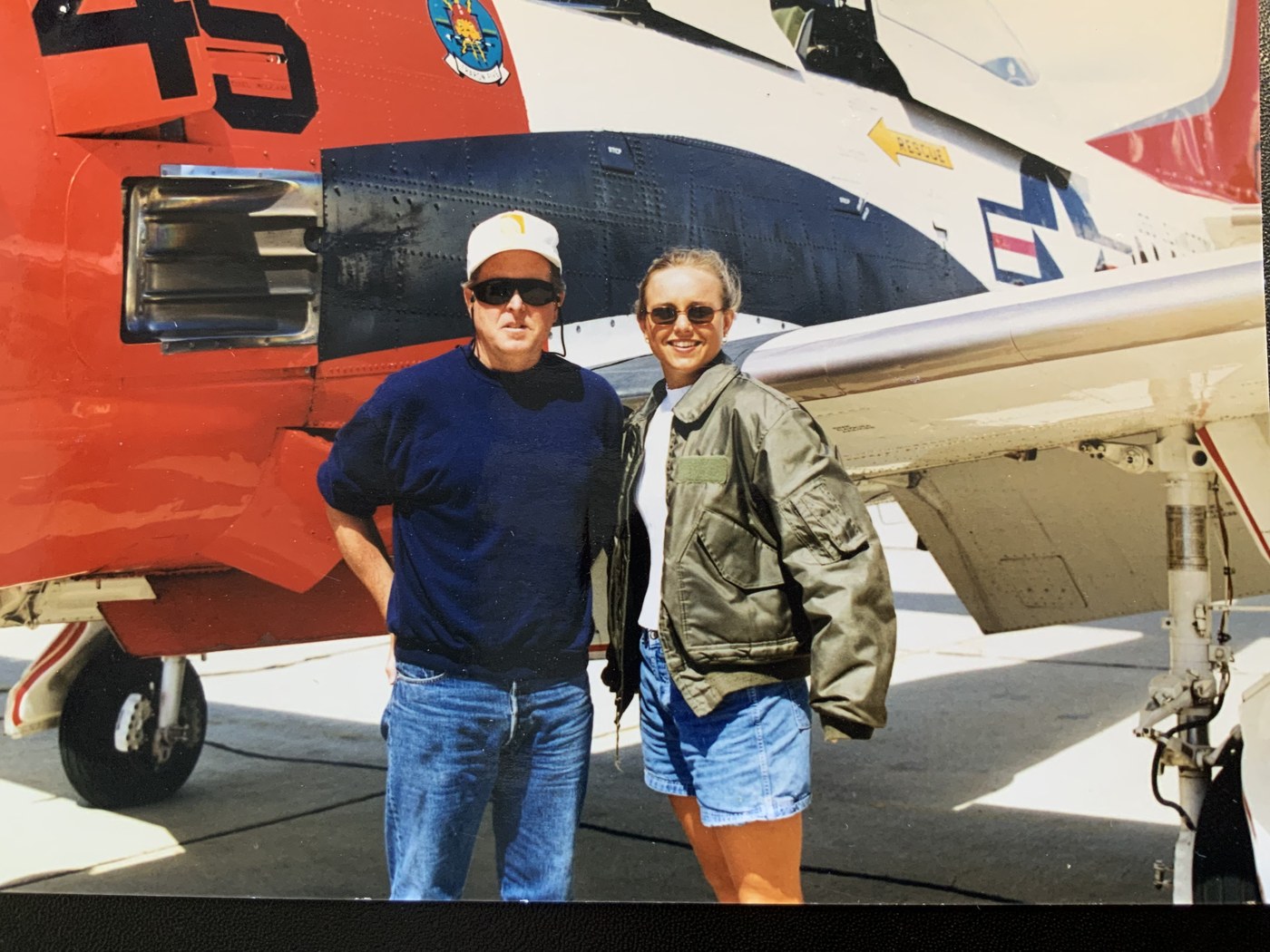
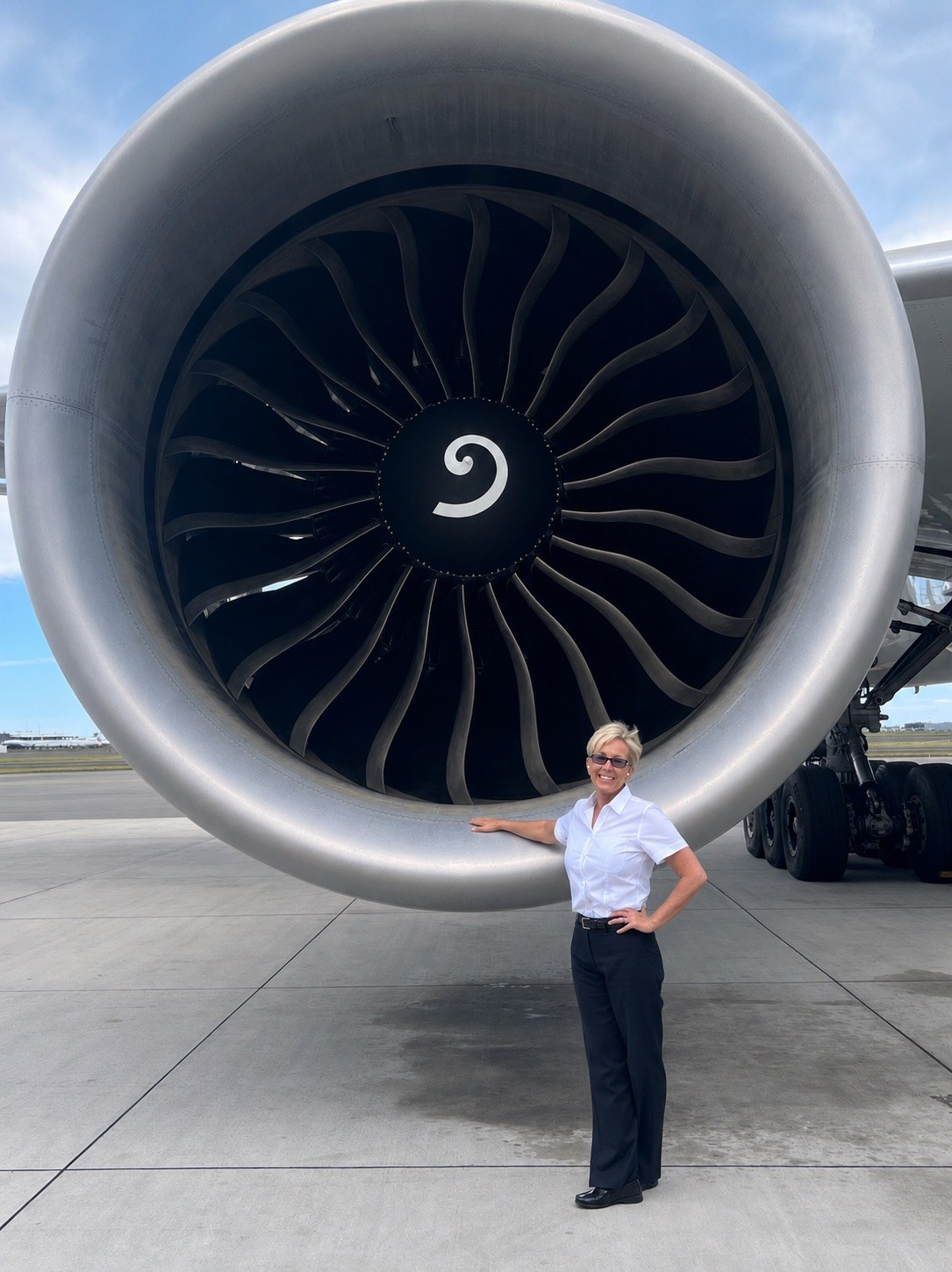
My mom, Michelle ("Micki") Sharp. 30-year airline career — she started in cargo and at the regionals, where the flying is both domestic and international right off the bat, and now flies international at a major US airline. 40 years aloft since her first lesson. Soloed at 17. Once ferried a Harbin Y-12 from Kunming, China to Lusaka, Zambia. The kind of résumé that doesn't need adjectives.
Her sister Auntie Kristen — Kristen Powell. Started at the regionals — domestic and international from the start — then came up through the B737, B757/B767, and B787, and currently flies the B777 at a major US airline. Soloed at 17, same age as my mom. She's also the curator behind the Germany, Brazil, Argentina, Panama, and Sydney entries on this site — the antique mahjong set, the Ming Dynasty jade pendant, the polenta pan from Argentina, the German cuckoo clock, the D'Elidas hot sauce from Panama.
Her sister Auntie Angie — Angela McGrath. Started at the regionals — domestic and international from the start — then the A319/A320 and 737, and currently flies the 757/767 at a major US airline (pilots call it the 756). Soloed on her 16th birthday in a Cessna 150, echoing Grandpa Jim's first solo at the same age in a Velie Mono Coupe. Two single-engine two-seat high-wing trainers, two pilots, one family, same milestone.
That last sentence is the one we keep coming back to. It's why the family thread holds up.
Generation 4 — my cousins and me
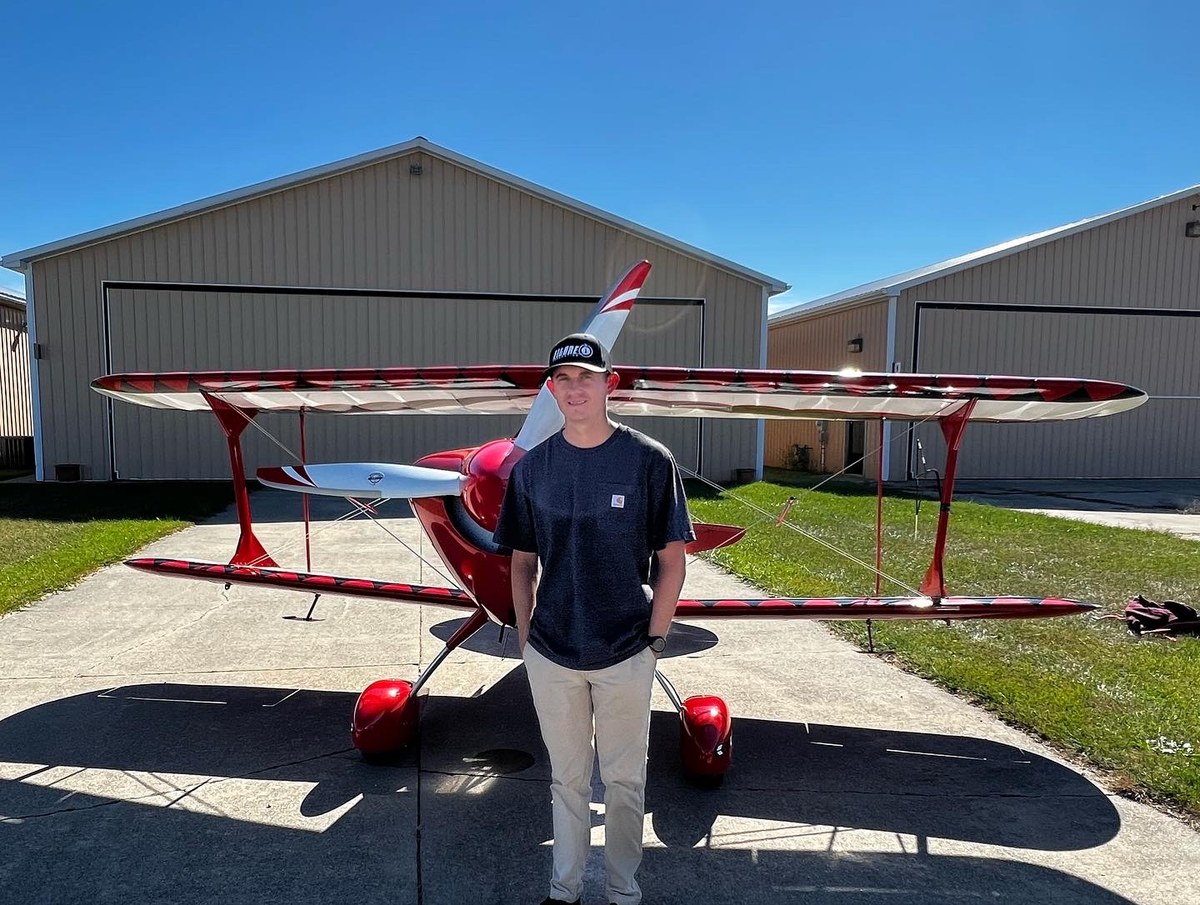
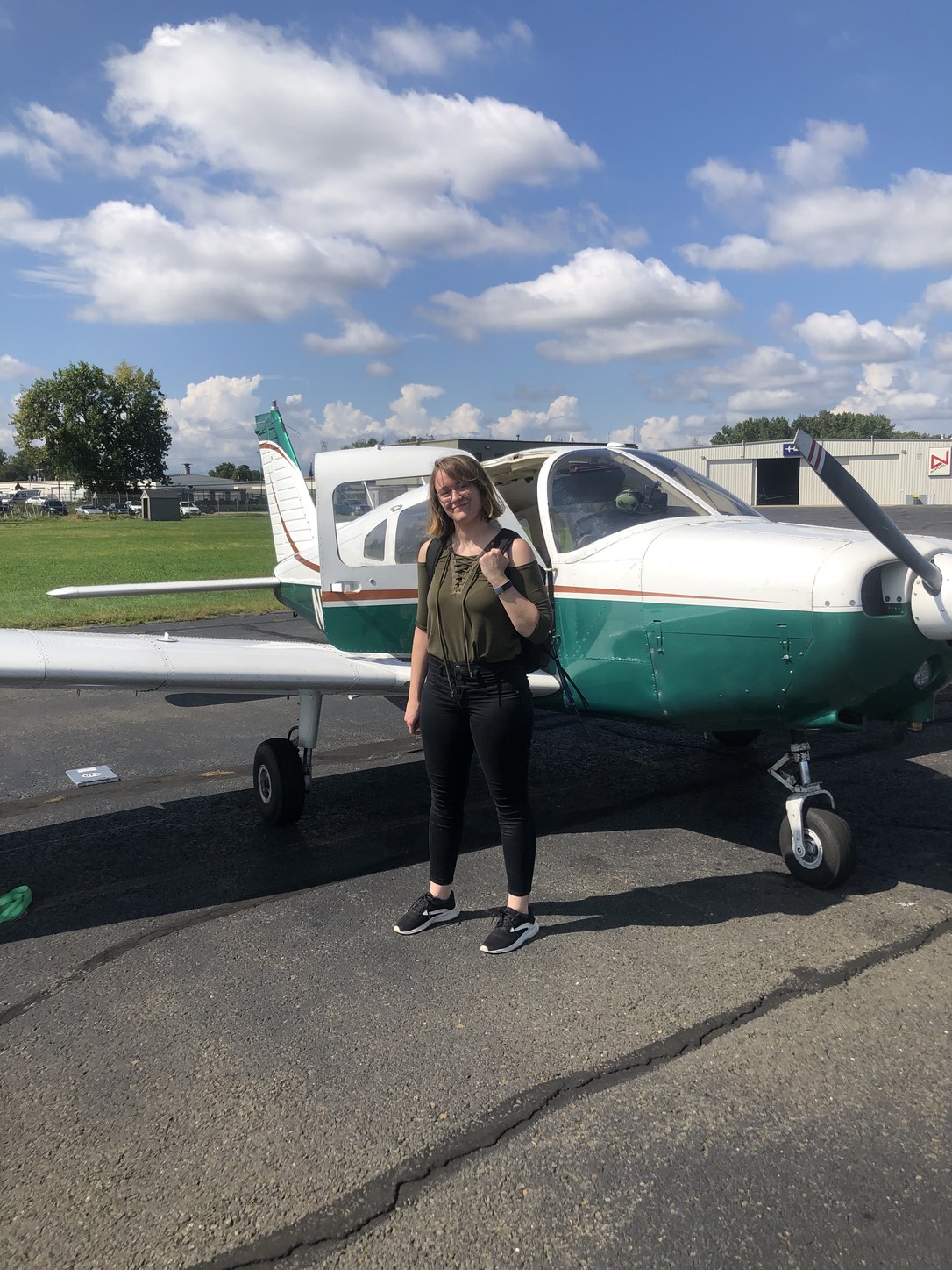
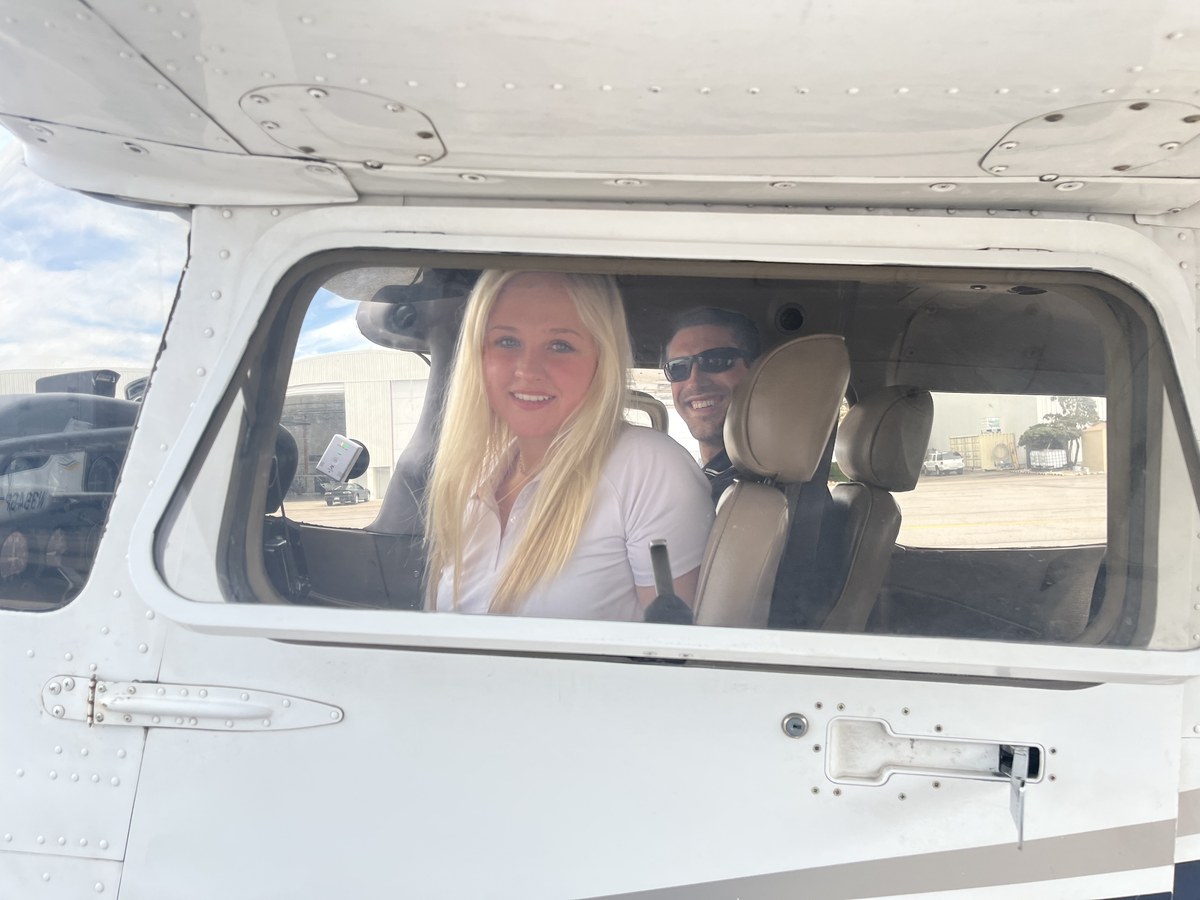
My first cousin Connor Philpott — Auntie Kristen's son. Currently flying Canadair Regional Jets (the CRJ family) at a US Commuter. Weekend airplane is a Pitts S1B, a red aerobatic biplane with chevron-arrow stripes on the lower wings. Aerobatic flying is the family pastime; airline flying is the day job.
My cousin Alicia — from the Lyndi branch of the tree, Uncle Tom and Aunt Lyndi's granddaughter. She's working through her ratings and building time, with her sights set on Atlas Air, where her dad Scott flies. Two branches of the family, and Generation 4 is still showing up at the airport.
And me. Eris. Got my student pilot certificate and FAA medical on my mom's birthday in March 2022, at 15. First flight lesson three days later. Turned 16 in May that year and became eligible to solo. I've paused active flight training while I'm in college and on track for a military commission. I may go back to it later. The active-flying torch in Generation 4 right now is carried by Connor and Alicia; I'm running the editorial side.
The rule that explains all of this
"If you fly it, you should be able to fix it."
Grandpa Jim said that to my grandfather. Grandpa lived it — A&P license, hand re-covered the family Stearman. My mom heard it her whole childhood. I've heard it my whole life.
It's the reason this is a shop where every item has been used. It's why we won't write up something none of us has actually carried. You don't recommend an airplane you've never flown. You don't recommend a travel bag you've never lived out of. You should be able to fix it applies to products the same way it applies to aircraft. We sell what we know.
← Back to About · Browse The Hangar → · Read stories from the road →